

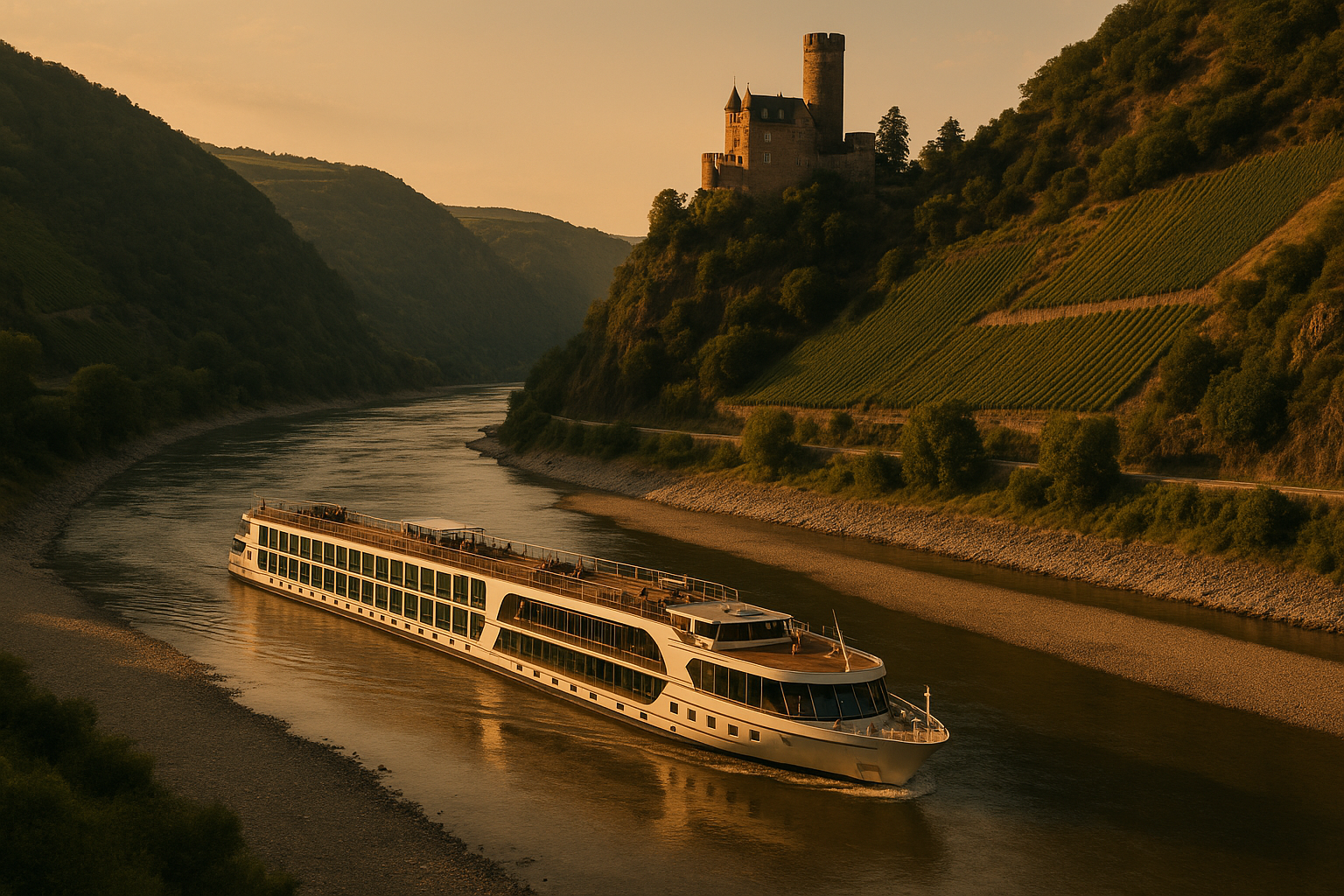
River Cruise Low Water: What It Means for Your 2026 Booking
Everyone shopping a European river cruise right now is comparing staterooms, wine pairings, and whether the sun deck has a pool. Almost nobody is asking the only question that decides the trip: will the river have enough water in it?
Short answer up front, because you're busy: low water almost never cancels a river cruise — it rewrites one. Ships swap mid-voyage, scenic sailing quietly becomes motorcoach mileage, and two bookings that look identical on paper can produce two very different vacations. Europe's rivers have spent another summer making the point. Here's what just changed, what it means for a trip you've booked or are about to, and how to build one that survives a dry year.
What just happened on Europe's rivers?
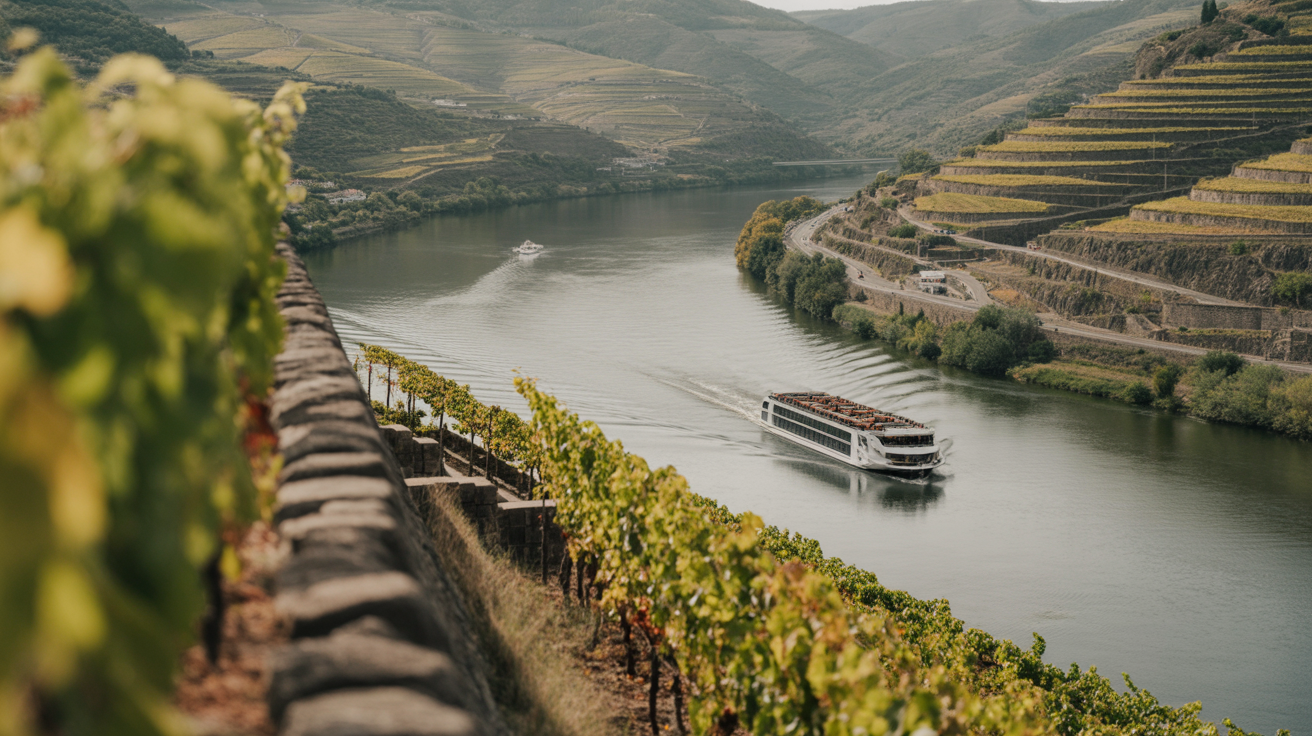
The recent tape, briefly. A Viking river ship, the Ullur, ran aground on a low stretch this summer. Another vessel, the Anna Katharina, was caught up in a lock incident. The Rhine and the Danube have both been running low in a drought pattern that has stopped being an anomaly and started being a season. And Portugal — whose Douro is largely dam-controlled, so depth isn't the problem — is moving to cap river cruise traffic instead, because the squeeze there is space, not water.
None of this is a reason to skip river cruising. All of it is a reason to book like someone who knows the machinery. The lines have managed low water for years and have gotten genuinely good at it; the travelers who get burned are the ones who never knew a playbook existed.
Low water doesn't cancel your river cruise. It quietly turns parts of it into a bus tour.
What actually happens when the river drops?
The best-case fix is the ship swap, and it's the industry's neatest magic trick. The big river lines run fleets of near-identical sister ships. When a shallow chokepoint — the Middle Rhine around the Kaub gauge is the notorious one — becomes impassable, your ship stops on one side, an identical twin waits on the other, and a coach carries you across the gap in an afternoon. You unpack in a cabin that looks exactly like the one you left, down to the reading light. Done well, you lose half a day and gain a dinner-party story.
The worse fix is the bus. The ship stays put, and the 'scenic cruising' line in your itinerary becomes highway. You still see Vienna. You just see it the way a regional sales rep does — instead of watching the Wachau Valley slide past your balcony while a glass of grüner veltliner sweats gently on the rail and the vineyards run their slow, terraced parade past your chair.
The fine print permits all of it. 'Itinerary subject to change' is the hardest-working sentence in river cruising, and almost nobody reads it until the email arrives three days before departure.
Worth knowing: A line's fleet is its low-water policy. Many identical sister ships means seamless swaps around a shallow stretch; a one-of-a-kind boutique ship usually means the fallback is a coach seat.
Which rivers are riskiest — and when?
A rough field guide — every year writes its own script, but the pattern holds:
| River | Low-water risk | Smarter window |
|---|---|---|
| Rhine (Middle Rhine) | Highest, late summer | April–June, October |
| Danube (upper stretches) | High, August–September | Spring, early fall |
| Douro | Low (dam-controlled); capacity capped instead | September harvest — book far ahead |
| Rhône / Seine | Moderate to low | Most of the season |
Note the cruel irony: the Rhine gorge near Kaub and the upper Danube around Passau — the classic chokepoints — are also some of the loveliest sailing on the continent. The Douro is the inverse case: the water behaves, but the cap means fewer ships, so the September harvest sailings everyone wants will sell out earlier and stay sold out.
And if you'd like to nearly opt out of this conversation entirely, look south and west: the Rhône through Provence and the Seine to Normandy run meaningfully lower risk most seasons, and nobody has ever regretted a week that ends in Burgundy wine or Norman butter.
How do you book a river cruise that survives a dry year?
Calendar first, cabin second. Shoulder season — April through June, then October — gives you fuller rivers, softer light, and towns that aren't performing for peak crowds. Late July through September is the risk window on the free-flowing rivers, and it's exactly when most first-timers book, because that's when people take vacations. That mismatch is the whole problem in one sentence.
Then locate yourself honestly:
| You are | Best call | The honest tradeoff |
|---|---|---|
| The scenery purist | Middle Rhine castles, spring | Pack a real jacket |
| The wine-and-table traveler | Douro in September, or the Rhône | The cap means booking a year out |
| The first-timer | Classic Danube, shoulder season | Fewer sun-deck afternoons than the brochure implies |
| The schedule-flexible | Late-season value on any river | You accept the swap-and-bus risk knowingly |
Finally, ask the two questions almost nobody asks before paying: What's your ship-swap capability on this route? and What exactly do I get if scenic sailing becomes a coach transfer? The answers vary wildly between lines, they're findable before you book, and they're worth more than any amenity chart you'll read this week.
Should you still book a river cruise?
Emphatically, yes. River cruising is growing — Gen X in particular is arriving in numbers, having discovered that unpacking once and waking up somewhere new beats airports — and when the water cooperates it remains one of the great low-friction ways to see Europe. The point of all this isn't fear. It's that the gap between the cinematic river trip and the expensive bus tour gets decided at booking, months before anyone checks a gauge. Decide it on purpose.
Deal note (dated August 2026): As this publishes, Riviera River Cruises is offering savings of up to 50% on European river sailings — book by August 5, 2026. River discounts often land on exactly the shoulder-season dates this article is telling you to target.
If you like driving, everything above is searchable and bookable directly at gnttravelpros.com. If you'd rather have someone who reads swap policies for sport vet the route, the month, and the fine print before you commit, that's precisely the kind of trip I enjoy building. Either way: pick the river and the month first. The wine list will still be there.
Places change — hours, menus, and whether a spot still has its magic. Worth a quick confirm before you go, or let me handle the details.
Happy Wayfaring!
Tosh R. Junior, CTA
Owner & Head Travel Pro
GNT Travel Pros - Dream Vacations
CERTIFIED MEMBERS OF


Let's Talk Travel
📞 Call us: (954) 220-TRVL (8785)
✉️ Email: tjunior@dreamvacations.com
🌐 Visit: gnttravelpros.com
Stay Connected
Let's keep in touch! Follow, review, and say hey anytime:
👍 Facebook: facebook.com/GNTTravelPros (or search “GNT Travel Pros” on Facebook!)
📸 Instagram: @gnttravelpros (or search “GNT Travel Pros” on Instagram!)
💼 LinkedIn: GNT Travel Pros - Dream Vacations
▶️ YouTube: @gnttravelpros — subscribe so you don’t miss new travel tips and cruise inspo!
📍 Find us on Google: GNT Travel Pros on Google
⭐ Loved working with us? Leave us a Google review
Oh, and One More Thing…
We're giving away a dream vacation right now. Imagine where it could take you. Enter here: gnttravelpros.com/contest. No purchase necessary. See site for full rules.
Have a trip in mind?
Let's turn this into a plan. A free consultation is the fastest way to get started.
Schedule a Free Consultation